Leading One Conversation at a Time

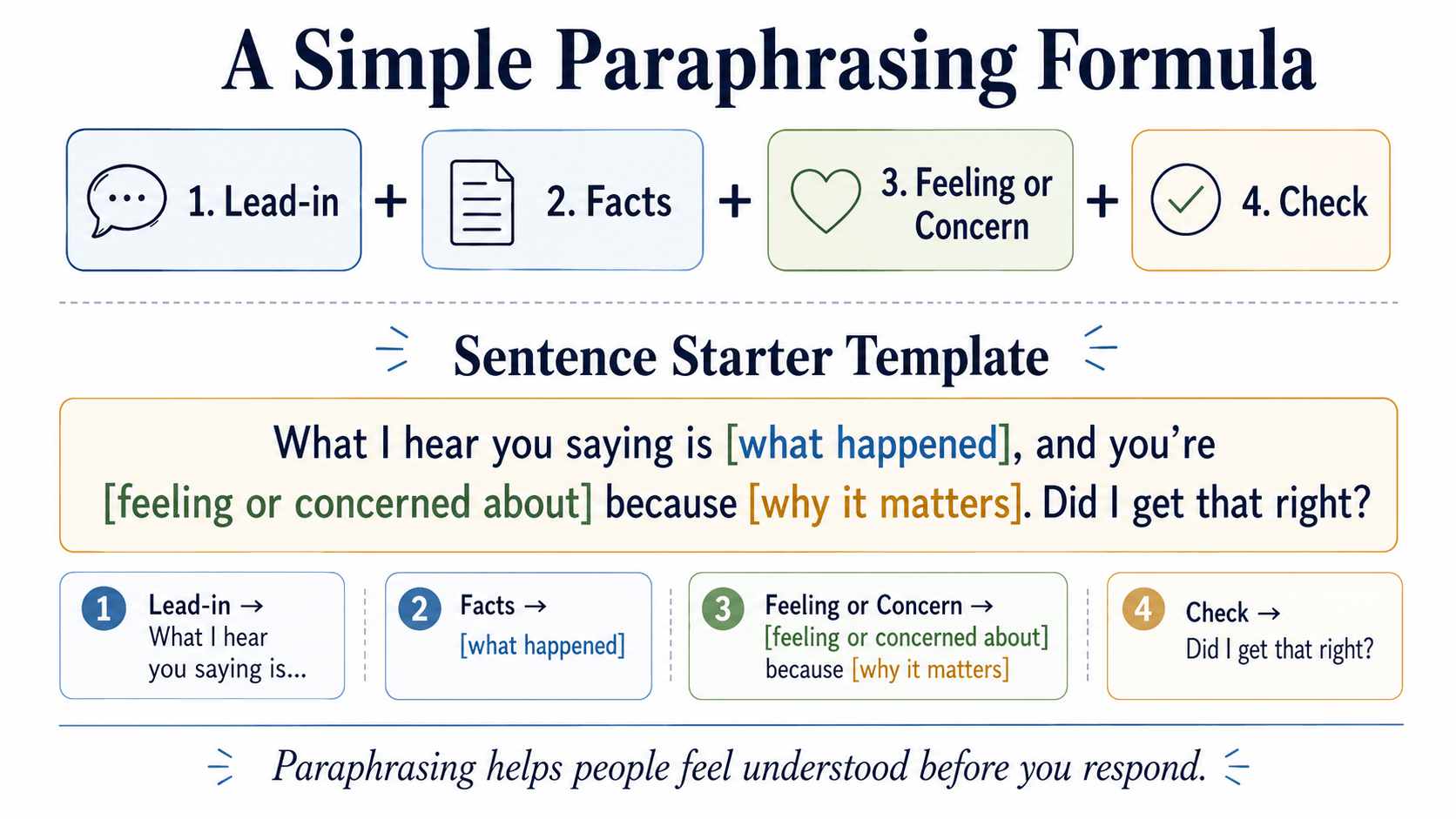
Paraphrasing is one of the simplest ways to help people feel heard and understood. By reflecting both the facts and the concern behind someone’s words, leaders can reduce misunderstandings, lower defensiveness, and create better conditions for solving the practical issue. This article introduces a simple paraphrasing formula and Sentence Starter Template you can use in everyday conversations.

Paraphrasing: The Listening Skill That Makes Conversations More Productive

October 19, 2026

A Simple Paraphrasing Formula showing four parts: Lead-in, Facts, Feeling or Concern, and Check, along with a fill-in-the-blank Sentence Starter Template.
Read more

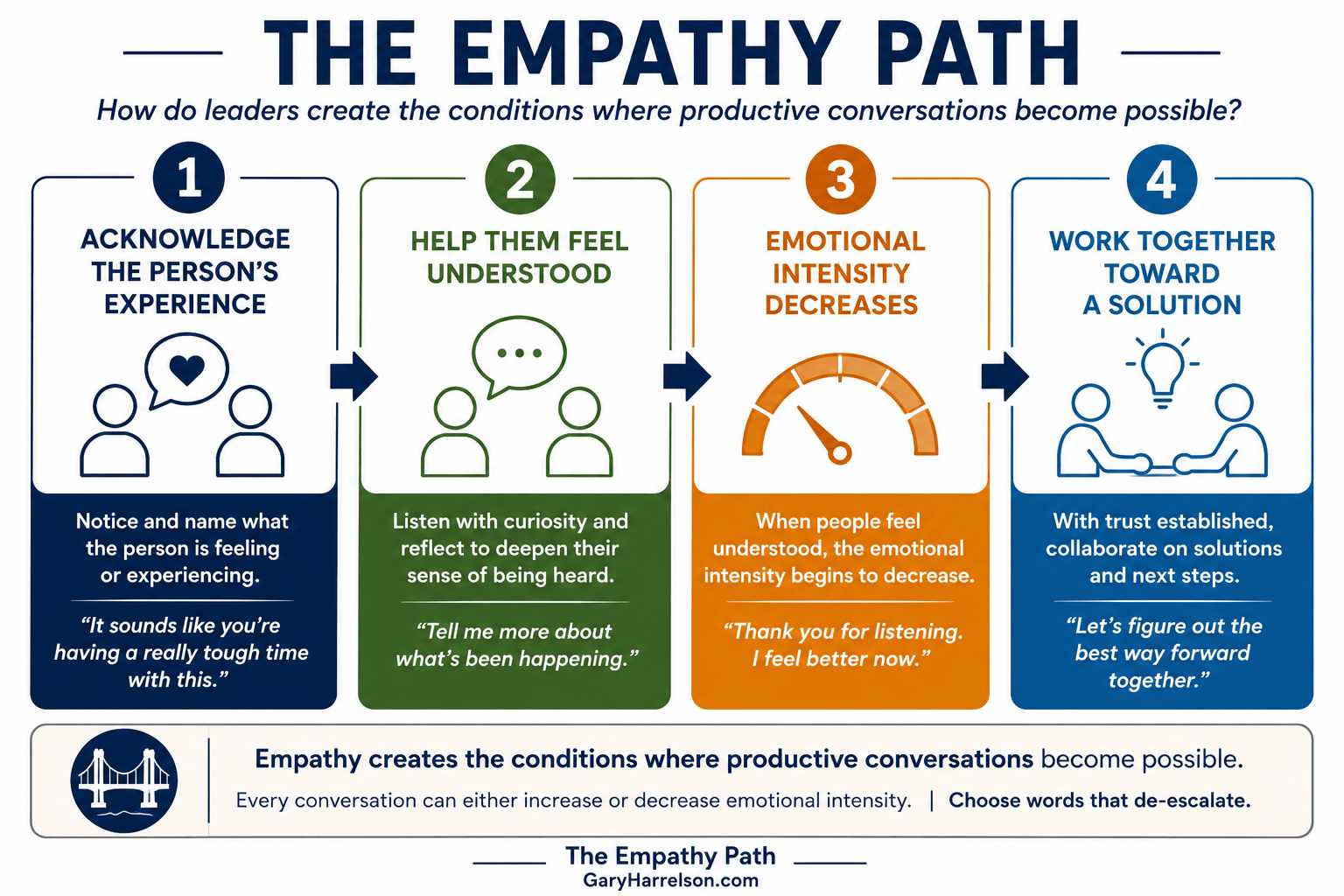
Empathy is more than being kind—it’s one of the most effective ways leaders create the conditions for productive conversations. Discover The Empathy Path, a practical framework that helps people feel understood, builds trust, and makes collaborative problem-solving possible.

The Empathy Path: Creating the Conditions for Productive Conversations

July 19, 2026

The Empathy Path framework showing four steps for creating productive conversations: acknowledge the person’s experience, help them feel understood, let emotional intensity decrease, and work together toward a solution.
Read more

When a resident’s frustration turns into interruptions, raised voices, or accusations, many managers struggle with how to address the behavior without making the conversation worse. The SBI (Situation-Behavior-Impact) model provides a simple framework for creating clarity, reducing defensiveness, and keeping conversations productive.

How To Address Behavior Without Creating Defensiveness: The SBI Feedback Model

June 21, 2026

Read more

A resident walks into the office with a simple question. “Do you know when maintenance is coming to look at my sink?” On the surface, this seems like a straightforward, transactional interaction. The resident needs information. You provide information. Conversation complete. Except…not entirely.

The Two Needs Behind Almost Every Conversation

June 3, 2026

Read more

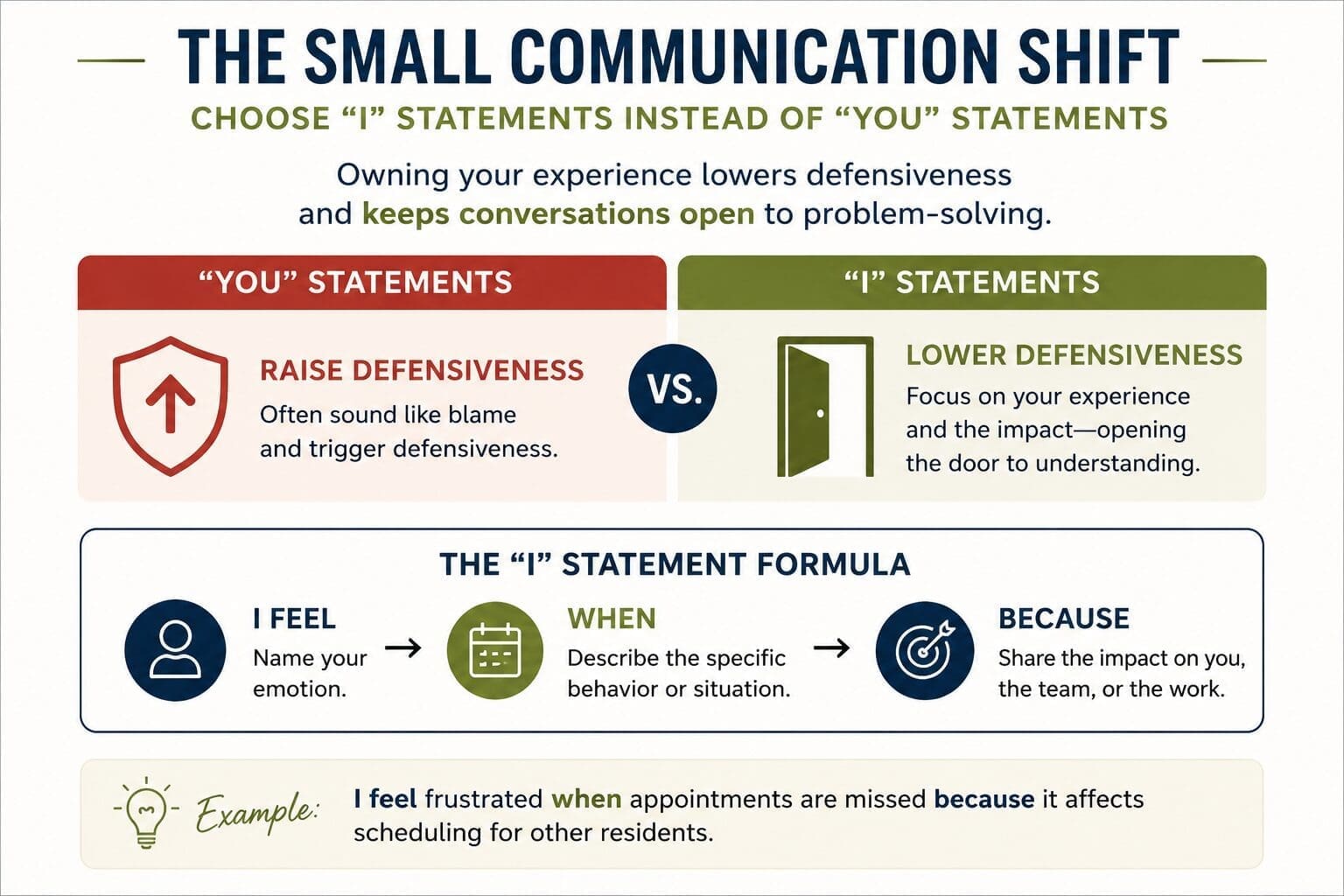
Then the resident says: “You’re not hearing me.” And just like that, the conversation shifts. Not because the policy changes. Not because the facts changed. Because the experience of the conversation changed. And in moments like this, the language we choose matters more than we often realize.

The Small Communication Shift That Changes Difficult Conversations

May 26, 2026

Read more

Some communication breakdowns don’t happen because leaders lack good intent. They happen because of one small, familiar word: “but.” It shows up everywhere, and almost every time, it quietly undoes the connection the speaker was trying to build. What makes “but” so powerful is that it often erases whatever came before it.

The Simple Word Swap That Changes Difficult Conversations

May 18, 2026

Read more

If you’ve spent any time in property management, you’ve likely seen a version of this scene. A resident is talking through a long-standing complaint. Their arms are crossed. Their voice is tight. It’s clear they’ve told this story before—and they don’t feel heard.

Listen to Understand, Not Just to Respond: A Skill Every Property Manager Needs

May 13, 2026

Read more

Keep Learning One Conversation at a Time

Every article I write is designed to give you one practical communication tool you can use in your very next conversation.

get practical tools

Receive new articles and practical communication tools delivered directly to your inbox.

Enjoyed this article?