Leading One Conversation at a Time
Then the resident says:
“You’re not hearing me.”
And just like that, the conversation shifts.
Not because the policy changes.
Not because the facts changed.
Because the experience of the conversation changed.
And in moments like this, the language we choose matters more than we often realize.
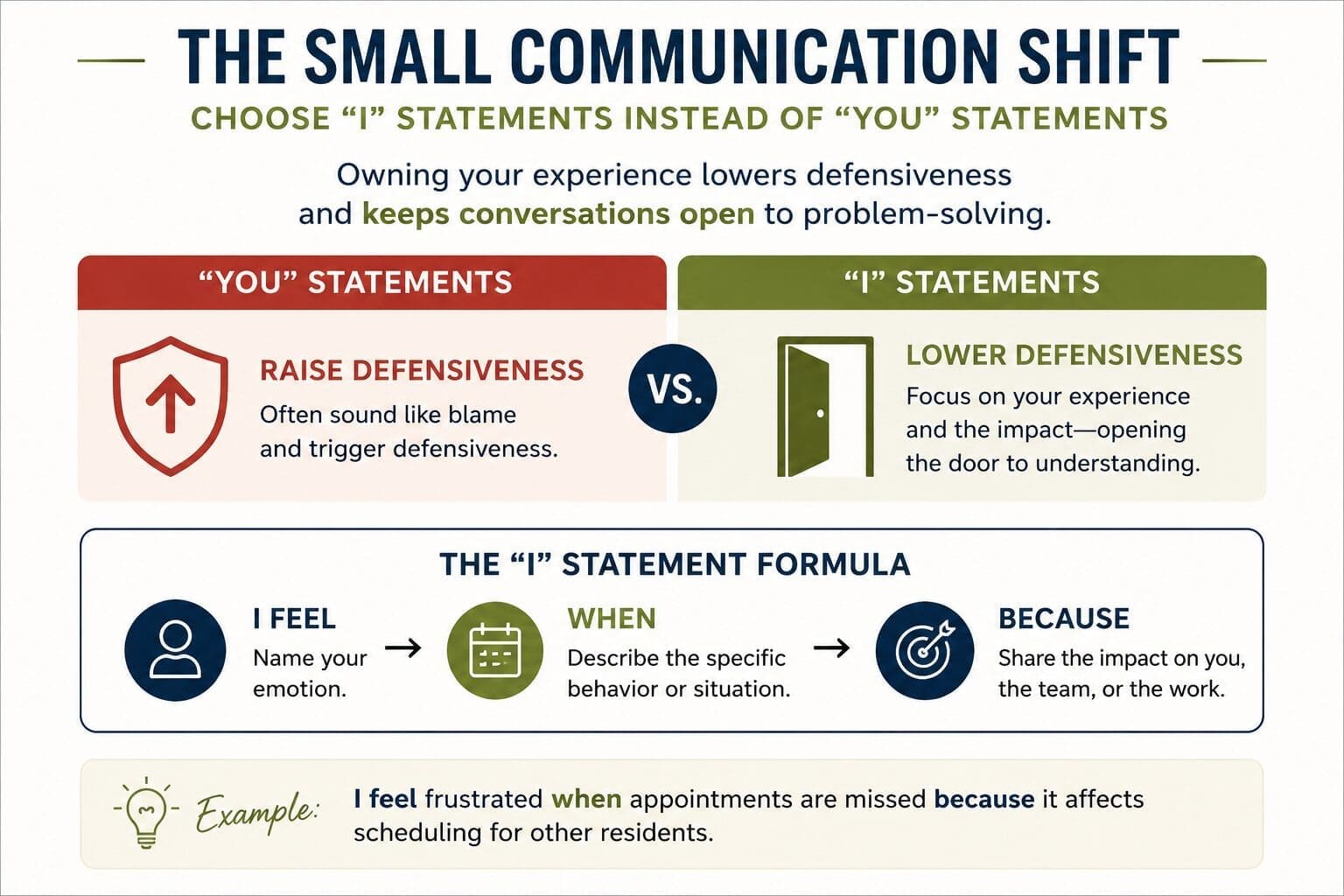
One small communication shift that can either raise defensiveness or lower it is choosing “I” statements instead of “You” statements.
Why This Matters In Affordable Housing
Affordable housing environments are emotionally complex.
You’re navigating:
- Resident frustration
- Regulatory requirements
- Limited resources
- Staff stress
- High expectations with little margin for error
In these moments, communication isn’t just about what you say; it’s about how responsibility and ownership show up in your words.
That’s where many conversations quietly go off track.
The Problem with “You” Statements
Let’s be honest: “You” statements often feel justified.
They usually come from patterns you’ve seen repeatedly:
- Missed appointments
- Escalating tone
- Lack of follow-through
- Ongoing complaints
But even when accurate, “you” statements tend to land as blame.
Examples:
- “You never follow the process.”
- “You’re not listening.”
- “You always wait until the last minute.”
The moment someone hears blame, the brain often shifts from listening to defending. The conversation becomes less about solving the issue and more about self-protection.
And once that happens, progress slows down fast.
That’s one reason an “I” statement can be so effective. By focusing on ownership rather than accusation, they help lower defensiveness and keep conversations more open to problem-solving.
What “I” Statements Are (and Aren’t)
“I statements are often misunderstood as:
- Weak
- Passive
- A way to avoid accountability
In reality, “I” statements are about ownership.
They communicate:
- This is my experience.
- This is how the situation is impacting me.
- I’m describing my experience, not assigning motive or blame.
They are not about blaming someone else for how you feel.
That distinction is critical.
Ownership tends to lower defensiveness. Accusation tends to raise it.
Owning Your Experience Changes the Tone
Here’s the mindset shift that matters most:
“You” statements locate the problem in the other person.
“I” statements locate the experience in you.
For example:
Instead of:
“You’re being disrespectful.”
Try:
“I feel disrespected when the conversation escalates.”
The second statement doesn’t excuse behavior, but it owns the experience rather than diagnosing the other person.
In resident interactions, staff conversations, or leadership discussions, that ownership is often wht keeps communication productive.
A Simple Structure That Helps (Especially Under Stress)
While “I” statements shouldn’t sound robotic, a simple structure helps when emotions are high:
I feel (emotion)
when (specific behavior or situation)
because (impact on me, the team, or the work)
Examples relevant to affordable housing:
- “I feel frustrated when appointments are missed because it affects scheduling for other residents.”
- “I feel concerned when maintenance requests escalate quickly because it limits our ability to respond effectively.”
- “I feel overwhelmed when expectations change without notice because I’m trying to prioritize fairly.”
Notice the pattern:
- Clear emotion
- Specific situation
- Real impact
No blame. No assumptions.
“I Still Need to Address Behavior”
Absolutely.
“I” statements are not a replacement for accountability or policy enforcement. They are a tool for moments when:
- Emotions are elevated
- Trust is strained
- You need understanding before resolution
Think of them as a door opener, not the entire conversation.
When people feel heard, they’re more likely to engage in problem-solving and accept boundaries or decisions, even when the answer is still “no.”
Side-by-Side: Small Shifts, Big Impact
Resident Conversation
Instead of:
“You’re not following the process.”
Try:
“I feel concerned when steps are skipped because it puts compliance at risk.”
Staff Conversation
Instead of:
“You always bring problems at the last minute.”
Try:
“I feel pressured when concerns surface right before deadlines because it limits our options for solving them together.”
Leadership Conversation
Instead of:
“You never communicate.”
Try:
“I feel out of the loop when I don’t receive updates because it affects planning.”
Why Leaders Should Model This Skill
As a site manager or property leader, your communication sets the tone for the staff and residents alike.
When you consistently own your language:
- Conversations de-escalate faster
- Trust builds over time
- Conflict becomes easier to navigate
You’re not just managing a situation; you’re modeling professionalism under pressure.
Put It Into Practice
Before your next difficult conversation, ask:
- What am I feeling right now?
- What specifically triggered it?
- What’s the real impact if this continues?
Then start with an “I” statement, and pause.
Often, that small shift is enough to change the entire direction of the conversation.
Continue the Conversation
If practical communication tools like this are helpful. Explore the weekly blog at GaryHarrelson.com for practical ideas on communication, leadership, and challenging conversations in affordable housing.
Clear communication isn’t about perfect wording.
It’s about owning your experience and choosing language that keeps conversations open.


Be the first to comment